It’s an incredible thing when you stop and think about it: to not only exist but to be sufficiently self-aware to inspect your own thoughts and behaviors. For most of human history, I imagine that the pinnacle of success was to feel safe from physical threats, have a warm place to sleep, and experience food security. In contrast, today one of my biggest concerns is that access to near-unlimited calorie-dense foods and engrossing entertainment is a great threat to my happiness. A lot can change in just a few thousand years and it’s a wonder that we even have the wherewithal to notice.
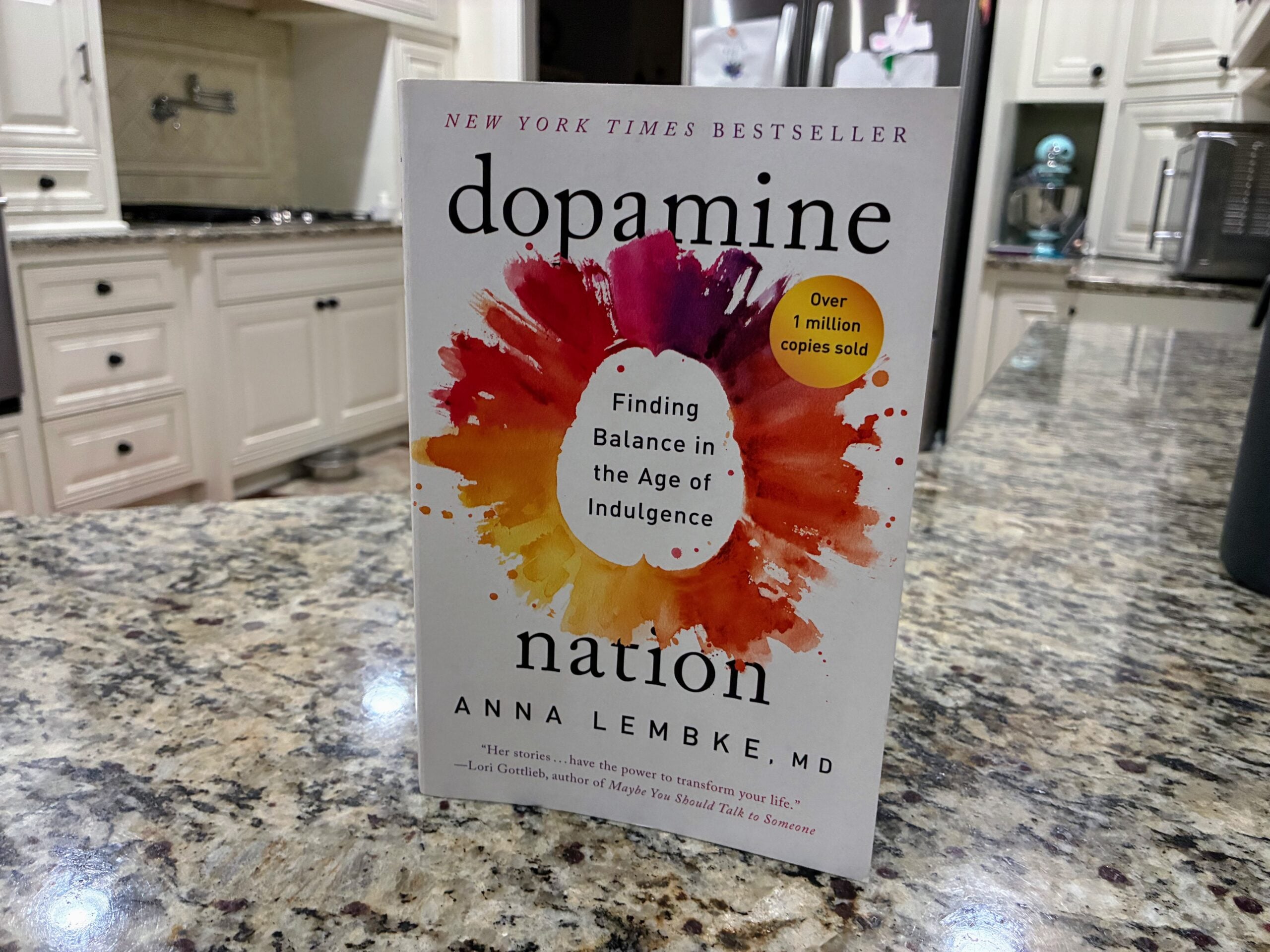
A couple of weeks ago I was out for a run with my friend Kale. As we ran (let’s be honest: power hiked) we talked about life. One of the things I’m doing right now (yet again) is a digital media sabbatical. Digital media, Reddit and Instagram in particular, can lead to problematic use territory where I engage mindlessly, lose track of time, feel bad after the fact, and find my brain a much noisier place. When I’m in this state I make worse choices across the board: I’m more distracted when working or with my kids, I’m more likely to indulge my sweet tooth, and so forth. Kale recommended a book, whose title he couldn’t recall at the time, but written by a Stanford doctor, about dopamine and how modern distractions like social media hijacks our brain’s reward center.
This wasn’t really new information. I’m aware of this phenomenon and I’ve experienced it firsthand. I had also heard of the book before, though I’d not read it. But I believe in chasing healthy curiosities, and focusing on this topic seemed like a healthy choice. So when I got home I did some research, found the book, and ordered it.
What’s the Big Idea?
Dopamine Nation by Anna Lembke, MD, explores how modernity is at war with our ability to feel happy. Modern life provides many ways to push our dopamine generation into overdrive and to (attempt to) avoid ever feeling pain, physical or otherwise.
Maximizing pleasure and avoiding pain sounds like a good thing except that our brains are wired to seek balance. Pain and pleasure are balanced against each other and when we continually press down on the pleasure side of the equation our brains regulate our pleasure-pain default setting to come to rest on the side of pain as compensation for the excessive dopamine load.
So what happens is that the more we lean into activities that generate loads of dopamine – endless scrolling, porn consumption, habitual overuse of chemicals that release dopamine – the worse we feel when we come down from our high. This creates a cycle where we continually want more and more dopamine and yet receive less and less pleasure from these activities the more we engage.
How to Fix Your Brain
So we’re (mostly) all caught in a cycle: engaging in behaviors and substances that dramatically jack up our dopamine production, which causes our natural set point to settle on the side of pain. This in turn leads to even more dopamine seeking behavior just to feel normal and the cycle just gets deeper and deeper leading to a state where we feel miserable anytime we aren’t engaging our drug of choice whether that be social media, porn, food, drugs, alcohol, or even risque vampire novels (the author’s self-reported personal vice).
How do we break the cycle?
In the book, Lembke proposes a series of strategies that can be brought to bear. First on the list: abstinence, which is achieved by identifying our problematic behaviors and engaging strategies to remove the source for a period of time (Lembke recommends at least a month). This gives the brain time to heal and return to a more natural balanced setpoint.
Supportive strategies covered in the book include self-binding activities, practicing radical honesty, embracing prosocial shaming, actively accepting some degree of pain, and more. The answer isn’t simple and Lembke doesn’t pretend that it is.
This is Not a Self-Help Book
If controlling our brains was easy social media companies would be out of business, or at least have to change their business model. Dopamine Nation is not a one-size-fits-all prescription for how to kick the habit. It’s a exploration of how many different pleasure-seeking behaviors turn the exact same dial in our brains, leading to pleasure-pain imbalance and suffering. Dr. Lembke sketches out a framework and provides strategy recommendations for building a plan to find balance.
If you’re looking for a book with a step-by-step prescription for how to stop [insert your problematic behavior here] this isn’t it, but I think that’s a good thing. Life is complex, brains are complex, effective solutions will need to be personalized to the complexities of our own unique lives and brains.
If the goal is behavior modification, I think the most effective deployment of Dopamine Nation would be to read it under the guidance of a mental healthcare professional leading into the development of a personalized plan that builds on the framework and strategies presented in the book. It may not be a self-help book, but the concepts are powerful and feel like they can lead to personal transformation when properly understood and applied.
Is It Worth Reading
Do you see yourself doing things you wish you didn’t do? Have you noticed a rush of anticipation when you think about picking up your phone or a drink? Do you feel bad when you aren’t consuming your favorite poison? Do you wish you understood your own brain or the compulsive or obsessive behaviors you observe in others?
If you answered yes to one or more of these questions Dopamine Nation might be right for you!
In all seriousness, this is a great book worthy of more than one reading. It’s powerful and complex. It’s also just well-written and entertaining. If the subject catches your attention and you’re open to someone shining a light on how you are often your own worst enemy you should pick it up.